I Am a Sailor's Daughter
Mary Abbott (1921-2019) loved the water. Her father, Lt. Commander Henry Livermore Abbott, was a decorated submarine commander in the first World War and a Naval advisor to FDR during WWII. She inherited his love of the sea. A native New Yorker (and sometimes cover girl), she came of age there as an artist in the late 1940s, joining the ranks of the new Abstract Expressionist movement. Her contemporary alignments included David Hare, Barnett Newman, and Willem de Kooning. A student of European Modernism, she was lucky to land a spot in the short-lived experimental school formed in 1948 called Subjects of the Artist. Organized by Mark Rothko, William Baziotes, Barnett Newman, David Hare and Robert Motherwell, Abbott fit right in but remembers: “Motherwell was in charge and he was OK, but always trying to educate you… I preferred Barney Newman and Rothko… they were the ones I learned the most from.”
In 1950 she married Tom Clyde, a successful investor, and the couple divided their time between the city, foreign travel, and the enclave of Southampton on Long Island. On the Island in the early fifties, as more and more artists decamped from New York, she became central to the growing artistic community. Missing the famous 9th St. Show, because she was out of the country, Abbott none-the-less enjoyed a robust exhibition schedule including at the Museum of Modern Art, the Kootz Gallery, Tanager, Robert Keen, the Stable Gallery, Signa, Kornblee, and Tibor de Nagy, among others.
After a divorce from Clyde in the sixties, Abbott accepted a teaching job in Minneapolis in 1970 where she remained for a decade. Eventually, back in New York, she maintained a studio in the city on West Broadway and small home on Corrigan Street in Southampton. Dealer Tom McCormick met Mary in 2002, beginning a nineteen year relationship with his namesake Chicago gallery, representing Mary until her death in 2019. In 2016 Abbott was included in the ground-breaking Denver Art Museum exhibition Women of Abstract Expressionism. This presentation shifted the paradigm of post-war American abstract painting, finally bringing long deserved attention to Abbott and other women artists of the era.
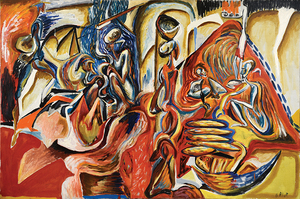
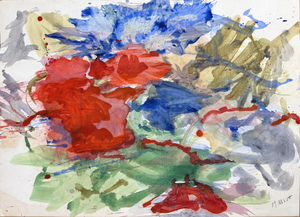
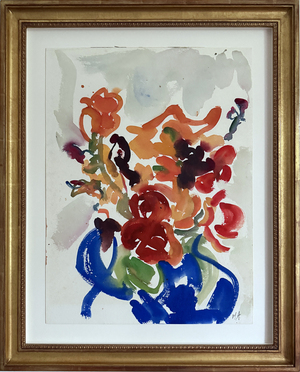
While Mary Abbott’s mature work is essentially abstract, she was devoted to nature and all things outdoors. During her marriage to Tom Clyde, winters were spent in the Caribbean on the islands of Haiti and St. Croix. She loved exploring the mountains and jungles, always with a sketchbook in hand. Her paintings featured the deep, brooding greens of the jungle and the vibrant reds of the local markets. She carefully married gestural abstraction with hints of figuration, such as in the Untitled (Market) scene, c.1950.
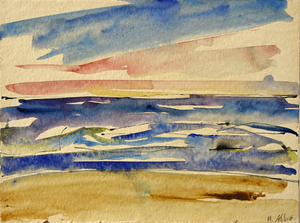
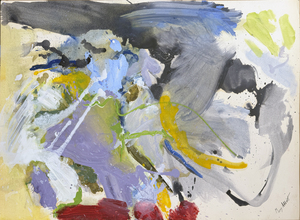
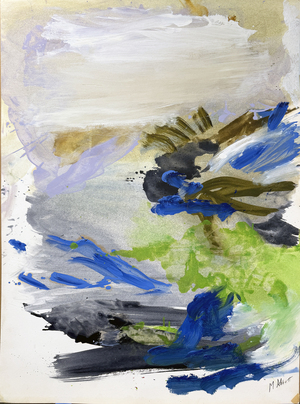
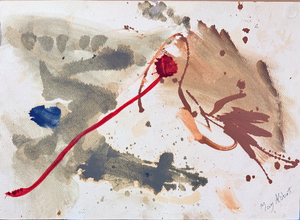
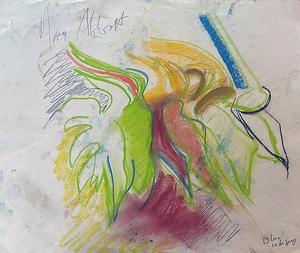
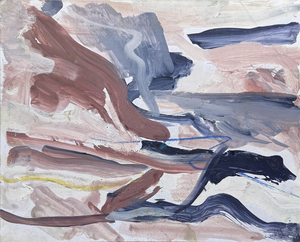
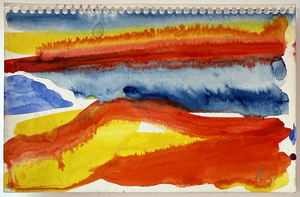
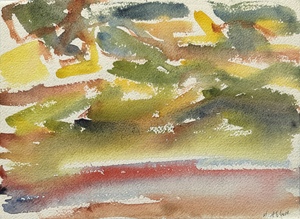
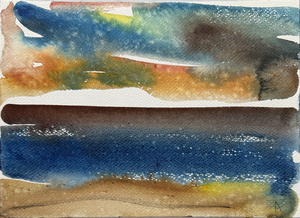
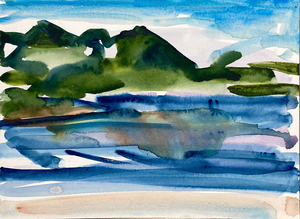
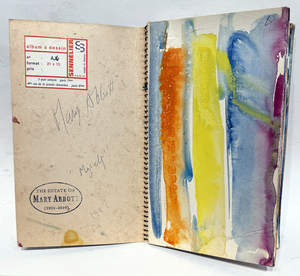
Beginning in the 1970s, Abbott began painting small, watery watercolors of the sea, often filling entire sketchbooks with abstracted impressions of water, horizons and clouds. Many of these works were created on the beach near her home in Southampton. Our show title comes from an inscription on the back of one such watercolor.
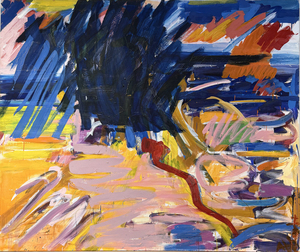
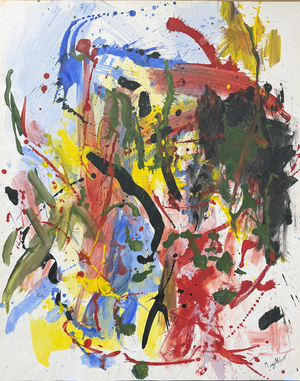
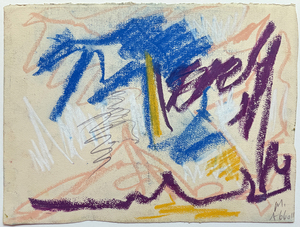
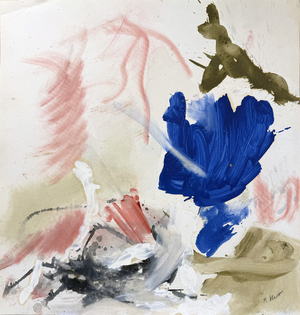
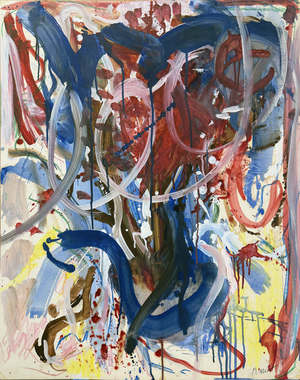
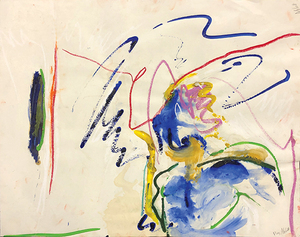
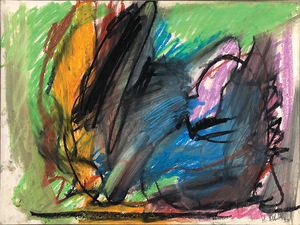
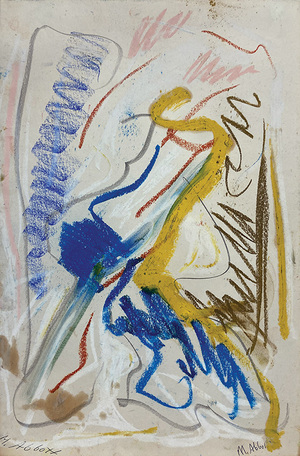
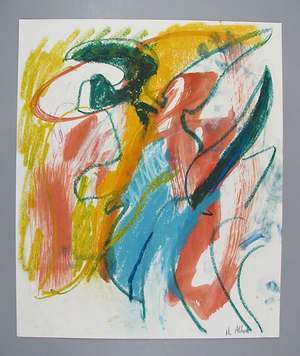
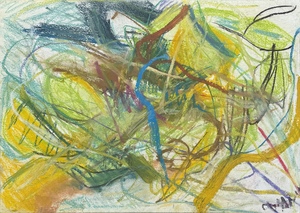
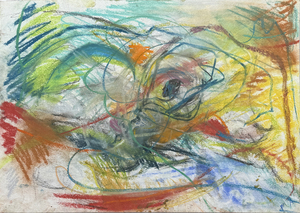
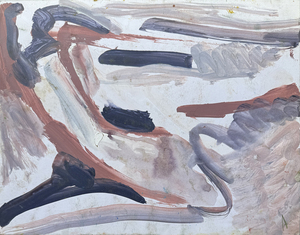
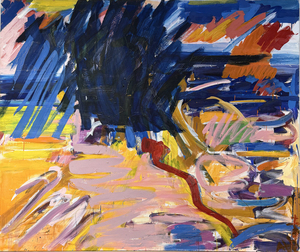
In Abbott’s larger, more complex abstractions, on both canvas and paper, one is tempted to interrogate the swirls, slashes and drips for clues, beyond her process, and into her mindset. In a work such as Cry Still, c.1960, a blue horizon seems to lurk behind the central, frenzied brushwork. Or perhaps not. It’s a dicey exercise to try and read narration into an abstract work. Mary had learned to reject rendering the object from Barney Newman years before, “…to destroy the object and get rid of the horizon,” as she told April Kingsley in a 1988 interview. In her later years the Sailor’s daughter seems to have kissed and made up, to some extent, with the horizon and was comfortable moving between the swirl of exuberant expression and the calm of an ocean view.